Showing posts with label Kuwait. Show all posts

Thursday, April 4, 2013

ATTENTION

Dear readers,

I have switched to Wordpress. I will no longer be using this website. Instead, you can read all my old post and the new ones on www.inevetablefate.wordpress.com. I hope you like it, I sure do!

Sincerely,
Jameela Al-Nakkas 

Wednesday, March 27, 2013

Maali Salmeen: The crazy turtle lady!

You read the title, it is about an awesome lady called Maali who is well, 'obsessed' with turtles!
I can't remember how I came across her profile on Instagram (where all the magic happens, obviously) but I really enjoy the pictures and information she posts about reptiles and different breeds of turtles. She was also the person I first thought of when this little cutie (pictures below) came into the clinic when I was volunteering at RAH. She invited me over before I traveled but sadly I wasn't able to make it. I can't wait to get back to K-town to meet her and her unique family!

Maali blogs as the Crazy Turtle Lady, check out her blog here. If you love turtles or reptiles, you MUST read it!


Tuesday, March 19, 2013

Update about Achilles


Achilles has had his operation and is recovering at RAH, he will head home soon! Many thanks to everyone at RAH and especially Dr. Jill Mullen for taking some precious time to explain to me what was wrong and for the pictures and updates (and the homework!). I illustrated the x-ray taken for his hips and explained what the surgery procedure is.


The circle around his right hip shows how the normal hip should be, with the "head" fitting the socket. On the other hand, the long arrow shows how the hip was dislocated, is out of the socket (pointed out with an arrow head) and coming in contact with the pelvis bone which was causing him severe pain and he was not able to put any weight on his left hind leg. 

The vets at RAH could not get the joint to stay in place so they did an operation which is called Femoral Head and Neck excision (Femoral Head Ostectomy). FHO is the removal of the ball which is supposed to fit in the socket, leaving the joint supported by muscle. The bone is cut approximately at the red line shown in the picture below. Thankfully, Achilles is able to put his leg down correctly so there is no nerve damage. 


the bone removed from Achilles' hip
surgery wound

Achilles after his surgery

the old dog can stand!

More on Femoral Head Ostectomy on http://dcvets.org/surgical/fho.pdf

Friday, March 15, 2013

Review: A Dog's Purpose

I love reading, especially books related to animals and I thought maybe I'll start doing some reviews on books that I read that are related to animals! The latest book I read was W. Bruce Cameron's A Dog's Purpose.

It is a fictional novel that takes you through the multiple lives of a dog who, in each life, learns something in order to achieve something in his next life. If you do not like the idea of reincarnation, then this book will be confusing for you. However, the author's way of writing was exciting and it grabbed my attention so well. I took the book with me to school and read between classes, it was so hard to put down! The book has funny moments, things that will make you smile, and situations that will make you cry.

The book let's you view the life of a stray puppy, a purebred puppy, a working dog and more all from the dog's point of view. It is very interesting and it gives you an idea about how dogs see our daily lives and how they live with us without actually understanding our language or why we do what we do.
It is such an amazing book that makes you realize all the things dogs do for us that make our lives better. It made me think about my dogs and all the dogs I have raised or found homes for and what they have done to effect me and other people in so many ways. A Dog's Purpose is a must-read for dog lovers!

I got the book from last year's annual bookfair in Kuwait, but you can find it on Amazon, there's also A Dog's Journey.


Tuesday, March 5, 2013

Starting a movement!

For those of you who are not following me on Instagram, I want to tell you about my StartAMovement hashtag.

This #StartAMovement is put on everything that is part of the movement I hope to start, which is Animal Care Awareness. I was inspired by one of the people I follow (@ozyzz). By this movement, I hope to get more people interested in learning about animal care and cruelty. In addition, some may even post information regarding pet care and certain breeds etc.

So if you love animals or pets and want to make Kuwait a better place for them, start posting the RIGHT information (seriously, make sure you do not post things that are not proven and are not true. So no rumors and ancient beliefs.) and tagging them with #StartAMovement. This way you can spread information and encourage others to learn and ask about animals.

Some of the accounts I really enjoy following on Instagram are:

@19green78


This man Fahad Al-Roumi posts a LOT of basic information about different kinds of animals in both English and Arabic. Very interesting new info about weird animals and fish as well! He deserves an applause for the work he does.

@dog_breeds_q8


Manal, who is a good friend of mine posts about different dog breeds, their requirements and some info all in Arabic. If you love dogs and you'd like to know more about them then you should check her profile out.

 @allaboutdogs1


This account is also about dog breeds. Very good information (mostly in Arabic) about certain things like the size of the litter and certain diseases. It mentions the basic things you need to consider before adopting (or buying) a certain dog breed.

 @emeraldscattery


This account is owned by a Chinchilla cat breeder. I usually wouldn't support breeders but the account is full of information that is helpful for cat owners. It's clear that the breeder is a responsible one, so I guess it's okay. A question-and-answer type of pictures in both English and Arabic which is fantastic. Plus pictures of cute Chinchilla cats!

If you have any suggestions please leave them in the comment section below or send me a message using my Contact Me page!

Saturday, January 12, 2013

Junk Food for Pets Continued.

So, now you know which age stage your pet is in, what special needs he/she has, how much food you need to buy and how much you're willing to spend. What's next?
  • Next step: choosing the right brand. 


There are a few (numbers are increasing) pet food brands in Kuwait, each claiming it is "the best",  "holistic",  "natural", or even "100% complete".It is up to YOU to know what is best for your pet. Do not rely on what the package says, it's usually just marketing. Ask pet owners, especially those whose pets seem healthy. Ask your vet, even ask clients what they feed their pets next time you're at the vet hospital. Ask professional breeders in your area. You can also read online reviews (but I wouldn't depend on them). Read about the nutritional needs of your pet's species. Try to gain as much information as possible so that all the marketing and schemes to just gain profits don't fool you.
 There is no other way to put this or summarize it, Wysong wrote it as simple as it is. Here are a few tips from Wysong (I'm being kind of biased I guess but this is my personal choice and I wouldn't have chose them if they didn't convince me) on choosing the right pet food company:

My brand of choice


1. PET HEALTH PHILOSOPHY: Does the pet health philosophy expressed by the company make sense, have scientific backing, and clearly put health as the number one priority? Or do they make mere claims designed to generate sales?

2. RESPONSIBLE EDUCATION: The pet food arena swarms with misinformation, much of which can cause serious health consequences. A responsible company taking on the serious responsibility of health must make its primary product education, not simply product sales. Such education must include teaching consumers how not to use any processed commercial products at all.

3. LEADER CREDENTIALS: What are the credentials, experience and accomplishments of the people in charge? Most pet food companies are led by a marketing person, movie star, venture capitalist, or a board of directors concerned primarily about profits. Yes, all pet food companies have a story about how their leaders love pets, had health problems with all the brands of pet foods, and that their pet did not improve until they cooked something up in the kitchen or consulted with so and so nutrition guru. But supplying foods that have the best prospect for achieving health is not about lore. It is best served by competency in health, nutrition, food science, and processing technology.

4. MANUFACTURING CONTROL: Is the pet food company also the owner of the manufacturing facility or in close control of formulations and manufacturing parameters? That is the only way true innovation can take place. Consider that anyone off the street can go to any number of pet food manufacturers and have them make a "new" food. Such contract manufacturers have files full of ready-to-go formulas. Then the marketing company can add a "special" ingredient, or remove a "demon" one, create a beguiling label and then make unsubstantiated claims about the superiority of the "revolutionary new" product. But, in fact, all the different brands of foods coming off the same production line are essentially the same.

5. THE "100% COMPLETE & BALANCED PET FOOD" MYTHDoes the company promote the claim of "100% complete and balanced"? This claim is a myth and is directly responsible for far-reaching nutritional diseases. Promotion of the claim proves a manufacturer does not properly understand animal nutrition and pet health and is under the mistaken (but profitable, since it misleads consumers into thinking they should feed only their processed food) view that manufactured foods can be complete, in other words, perfect.

6. RAW: Does the company either supply or advocate the use of raw foods in the diet? There is no creature in existence, other than humans, that cooks their food. Rawness is as essential to health as is air, sunshine, and water. It is the stuff of nature. If the company does not understand this, then they should most certainly not be trusted in supplying foods they expect your pet to eat at every meal.

7. MEAT AND PROTEIN: Carnivores require meats and organs, and the high protein and quality fats (including omega 3, 6, 9) these foods provide. A small amount of vegetable material is also important. Carnivores receive this by incidental browsing and by consuming some of the ingesta in their prey. This does not mean finding one high protein, high meat food and feeding that continuously. Variety and rotation are critical. Companies that do not provide foods or education matching these principles, or, if they do, advocate feeding them exclusively, do not properly understand health or nutrition.

8. VARIETY AND ROTATIONGiven modern circumstances, pet health is best served by a variety of foods combined in various ways, rotated, and supplemented. This can include processed canned, dried, frozen, and TNT™ (True Non-Thermal™) dried, as well as fresh foods and supplements. This provides convenience, affordability, and optimizes nutrition, as well as minimizes the chances of toxicity. No it is not as simple as one product from one bag meal after meal. But health is not easy. It takes thought and effort. Companies that do not provide products to accomplish such a method of feeding, or teach how it can be accomplished, are not serving your pet’s health interests.

9. FOCUS ON ANALYSES: Although some general information about a food’s ability to maintain an animal can be gleaned from the analysis on the package, focusing on such is misleading. Pets should be fed a variety of foods, not one food with the supposed "correct" percentages or ingredients. If this is done using quality foods, the body will select what it needs for health. Animals in the wild do not eat by analysis and yet have robust health. Pet foods with the "proper" analysis have been (and are) responsible for terrible disease and countless deaths. A focus on analysis leads consumers to believe the lie that feeding one food meal after meal with "just the right analysis" is the key to health.

10. FADS OVER FACTS: Does the company follow fads or does it lead with solid responsible information? Fads include: high fiber, low cholesterol, low fat, natural, no preservatives, four food groups, high protein, human grade, grain free, and the like. Such singular focus on faddish pet food fallacies demonstrates either an incomplete understanding of nutrition or a motive to profit from misinformed and gullible consumers.


11. INGREDIENT BOOGEYMEN: Does the company fear monger about "boogeyman" ingredients? Current examples of such nutritional boogeymen include: soy, corn, wheat, grains, fat, by-products, 4-D meat, garlic, digests, seaweed, ash, meat meal, yeast, magnesium, and others. Popular misconceptions, dubious field reports, selective examination of the scientific and medical literature, and poorly conducted science lie at the base of such beliefs. If a pet food company uses such fallacies to promote their products, they either do not understand pet nutrition or desire to play on popular ignorance for financial gain.

12. TOXIN PARANOIA: There is a basic principle in toxicology that is essential to understand. It is: the dose makes the poison. Anything can be toxic in high enough dose, even oxygen and water. What may be toxic at one dose may be life saving at another. In the literature, somewhere, can be found a study proving that this or that ingredient fed to mice at levels that would choke a horse is toxic. Producers who champion such scare tactics in order to sell their products (without the "poisonous" ingredient) are either misinformed, naive, or purposely using fear to create sales. As a rule, ingredients that have been used for thousands of years by humans and animals are safe if fed in variety and in reasonable amounts. Yes, some things can be toxic. But that can only be determined by understanding the relationship between dosage and toxicity. Since these understandings are constantly changing, the only safe way to feed is by rotation and variety using quality products from competent producers who do not mislead.

13. NONALLERGENIC: Many pet foods are marketed using the claim that they do not contain this or that allergenic ingredient. However, practically anything can be allergenic, particularly if it is fed meal after meal. Also, there is no clinical or laboratory test that can determine the allergenicity of a mixed processed pet food regardless of its ingredients.  The only way to know is to test feed. So claiming the merit of a food because it does not have supposedly allergenic ingredients that have been used successfully for thousands of years (such as corn, soy, wheat, etc.), and instead has rice, potato, peas, buckwheat, tapioca, etc., is misleading. The key to immune health and food tolerance is variety and rotation, not finding the "one perfect food" without a supposed allergenic ingredient.

14. ORGANIC: Organic foods produced at sustainable farms are a step in the right direction. But no one thing is ever the answer to everything, especially with respect to the complexity of health. Merely being pesticide and herbicide free in order to garner the organic label does not mean the products are produced in a sustainable way using permaculture methods. That issue aside, promoting a pet food to be fed exclusively meal after meal just because it is organic, misses the point. It will increase susceptibility to toxicity since even organic foods can contain tens of thousands of natural toxins. Good nutrition cannot be obtained by feeding the same food meal after meal. Whether organic or not, foods need to be rotated to optimize nutrition and avoid toxicity.

15. HUMAN GRADEThe term "human grade" has more to do with language and aesthetics than nutrition and health. In the wild, eating the ideal diet, pets consume nothing that is human grade. They eat the dead, dying, diseased, and disabled ("4-D" meats) and thrive so long as there is sufficient food available. On the other hand, "human grade" white meat, white flour, white rice, white sugar, white salt, candy, pop, hydrogenated oils, and additives can starve pets and cause severe disease. Claiming that a pet food is human grade is a play on human ignorance.

16. ENVIRONMENTAL DISREGARD: Many nutritious parts of foods would be discarded if not used in pet foods. Animals do not have the aversion to names like "by-products" (and remember that is just a human invented word) that humans do. In fact, many of the parts of food animals considered distasteful to humans (such as viscera and organs) are the most nutritious part of the carcass. To discard such because of our human tastes—imposing those frivolous tastes on our pets—is to cause enormous waste. It diverts human grade products to pet foods that could go into the human food supply. It is also inhumane to slaughter animals and then discard healthful parts that could be used by pets to great benefit. It also wastes land, feed, shipping, and other resources by increasing the demand for just the "pleasing" parts of the food animal carcass.

17. MISLEADING PORTRAYALS: Everyone knows the cost of select cuts of meat at the grocer. They also know the cost of pet foods. Nevertheless, some pet food producers portray their products as containing prime steaks, barbecued chicken, grilled salmon, and the like. A half-pound grilled salmon dinner can easily cost $20 in a restaurant. So how can a grilled salmon pet food that is processed in a ten million dollar plant, spiked with vitamins, minerals, and other expensive ingredients, packaged expensively, shipped and marked up through salespeople, distributors, and retailers cost something like fifty cents for a half-pound? It can’t. Honesty and character matter. If you are being misled into believing you are receiving something you are not, then why should claims about the healthiness of the food be believed either? 

18. FOODS AS DRUGS: Just because a food is marketed by prescription is no reason to believe the food is either healthy or safe to be fed at every meal. Many such foods contain a variety of low quality ingredients—such as food fractions, additives, sugars, and starches—that are known to cause, not prevent or reverse disease. The best prescription for health is whole natural foods that mimic the genetic expectation of the animal. Any company theme other than this, even if presented as high tech medicine, is misleading.

19. COSMETICS OVER PET NUTRITION: Many pet food producers target food cosmetics rather than real nutrition. Flavors, shapes, packaging, bonuses, discounts, coupons, pricing, guarantees and the like are essentially unrelated to health and nutrition. Nutrition is serious business, not recreation to be promoted with balloons and raffles.

20. INNOVATION: Since nutritional science is a rapidly growing and expanding field of knowledge, a producer truly interested in pet health should be innovative. Adapting new knowledge to formulations, processing, packaging and education should be ongoing and these innovations should be clearly communicated to consumers. Most pet food companies don’t lead, they follow. Consumers would be wise to follow leaders, not followers.

For more information, please visit http://www.wysong.net/pet-health-and-nutrition/welcome.php or subscribe to their 100 Pet Health Truths (highly recommended).

Monday, January 7, 2013

Junk food for pets

Happy New Year my dear readers!

Since the topic with the highest votes in my last poll was "Junk food for pets" it is what I will try to explain here. The problem is this topic isn't easy to discuss in one post, so I'll be dividing it to several posts. In this post I will give you a few general tips and I will leave you with the brand that I chose and why I chose it. If you have any questions please leave them in the comments or email me on jameelalnakkas@gmail.com

One of the first steps of getting a pet is to decide what are you going to feed it. A few years ago, we didn't have many choices in Kuwait as there were almost no pet shops that supply different types of pet food but now it seems like there is a new pet shop opening every month! That is a good thing, we are now able to choose what is best for our animals. After all it is our responsibility to make sure they live a comfortable life and that they are healthy. Why should you feed your pet good food? Why not just anything, any brand as long as it's "food"? 

It's simple:
  1. A healthy animal is a happy animal, and a happy pet means a happy owner!
  2. It's better to spend more money on better food and your pet's health rather than spending hundreds of KDs on vet bills.
When you first go shopping for pet food, the first thing you should think about is the pet's species (cat, dog, bird, etc.), second is the age (young, adult, or senior), third would be the size of the food bag or can, forth would be the cost, and lastly, how often is the brand in stock (cause sudden change of food is not good for your pet). These are the basic things that you should consider when deciding what to feed your pet. There are other things to take into consideration like what the breeder used to feed the pet's mom during and after pregnancy, what the animal was fed while it's growing (or what it was fed in the shelter), and of course health problems and specific needs of your pet as instructed but its vet.
Now, is that all you need to know about your pet food? Is that all it takes for your pet to live a long healthy life? Of course not. The food you choose makes a difference. You can choose whether to feed your pet a healthy diet, or junk food for pets.

I chose to feed Chance, Achilles and Tailor a brand called Wysong (you can get Wysong at Pawsh Boutique or RAH). They have changed the way I see pet feeding. Their concept will make you realize things that are so obvious but you just never thought of. The boys love the food. Their coats are great, no allergies, no vomiting, and the transition only took four days! Also, I pick up dog poop only once or twice a day. I seriously love preparing it, seeing the raw meat and the vegetables. I will be using Wysong as my reference in this topic and I would recommend that you read about them and their 100 Pet Health Truths.

My first Wysong order from Pawsh Boutique (Epigen, UnCanny Chicken & Yogurt, Rabbit AuJus)
Chance's dinner, Blue Buffalo Life Protection Formula mixed with Wysong UnCanny and sprinkled with Missing Link Ultimate Hip & Joint supplement
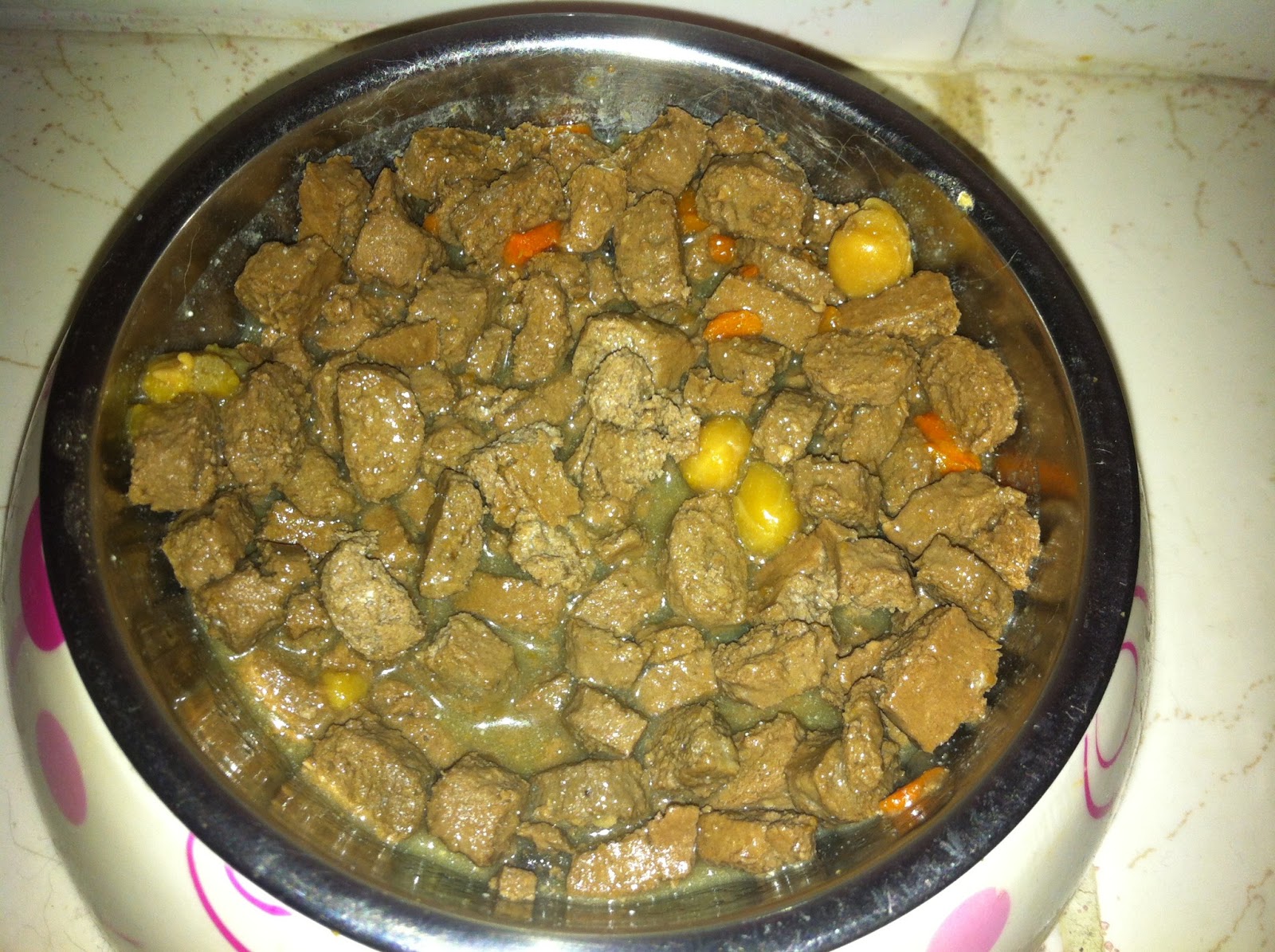
Tailor's beef stew in gravy (I think, not sure with all the different canned food he eats)

Chance giving me the puppy eyes, waiting for the command "you can eat"

Achilles waiting too


Stay tuned for more! I will be telling you about the first step in making sure you know all about your pets' food and that you are feeding your pet what it needs in the my next post!

Sunday, December 16, 2012

Parasites in my kitty?!

Yesterday, I took Tailor my cat to see Dr. Sergio at Royal Animal Hospital. A few days ago I noticed a blotch of blood on my floor and I found out it was from Tailor. I freaked out and booked an appointment as soon as I could. Luckily, it wasn't what I feared, I was worried that he might have swallowed something and it hurt his intestine. Tailor has a habit of eating plastic doll dresses from the kids room and he might have sneaked into the kids' room and ate some. But that wasn't the case, thank God.
So after I explained to Dr. Sergio Tailor's symptoms, he took a sample of fresh feces from Tailor's anus (I know you're all grossed out now) and he diluted it in a liquid then put a drop on a test bar (image below). The barely there, thin, red line means that he has a few Gastrointestinal Parasites. Tailor has Giardia.


Here's what I found out about Feline Giardia:
1) Feline Giardia is a small parasite that lives in a cat's small intestines.
2) It causes diarrhea and sometimes blood in the stool.
3) It is treatable and can be controlled.
4) A cat can get Giardia by eating food (mostly raw meat) that have Giardia cysts.
5) Feline Giardia can infect people and other cats through cysts that are passed out in the stool.

So now we're taking precautions with cleaning the litter, cleaning Tailor himself, and his water and food bowls. With the medicine Dr. Sergio gave him, hopefully, he'll recover in no time. Here's how he looks after taking the medicine, he was furious! (The foaming and saliva is normal from the medicine, he wasn't hurt.)
"Why are you doing this to me?"
"You're so gonna pay for this!"

Trying to change the taste in his mouth!

Now, this made me think of explaining the common misunderstanding of a certain feline parasite's effect on us humans. In Kuwait, it is thought that a woman who owns, takes care of, or lives with a cat can become infertile. In other words, if you come in contact with a cat daily, you can't have children. That is a mistake most people here make that leads to families or ladies giving up their pet cats or being terrified of cats because they think cat hair causes infertility.
The truth is, there is a feline parasite that can harm the fetus, a baby, while it is still in its mother's womb. The parasite is called Toxoplasma gondi. If the mother is infected before getting pregnant, she will become immune to it and so will the fetus during pregnancy. However, if the mother is infected during pregnancy, it can cause abortion or even brain damage to the fetus.
Toxoplasma gondi, just like Giardia, is passed out in the stool. Therefore, the precautions are the same:
1) Wear gloves and mouth masks while cleaning your cats' litterbox.
2) Wash your hands thoroughly after handling the litterbox.
3) If you are pregnant and there is someone else who can clean the litterbox, let them do it.
4) Clean the litterbox more frequently.

Of course, taking your cat to the vet regularly for check-ups and as soon as you can if you suspect your cat is sick, as well as making sure that your cat always has fresh, clean food and water available will keep you and your cat safe from infections.


Tuesday, December 11, 2012

To Breed or Not to Breed?

I will talk about something that is taken so lightly here in Kuwait. Actually, it is totally normal for people to do this, but it has a very negative impact on animals and on our society. I will talk about breeding. Whether it is a cat or a dog, breeding is breeding. It is a reason why we have so many animals running in the streets, the reason why the shelters are full, and the reason why animals are dying out there.

As I explained in my "About "page, I will expose myself and I will talk about my personal experience. I will not act as a saint in this. I did breed, I bred once. My first Labrador Sugar, we took her to my dad's friend who had a beautiful Siberian Husky mix and they mated. I took great care of her, fed her well, took her for Sonar scans and all. But I did one mistake that made me regret that I ever thought of breeding. When the pups were born, three beautiful females and a tiny male, I took care of them for four months, then it was time to find them homes. I had six dogs at that time, Achilles, Sugar and her four puppies. They were well taken care of but they had to go to new homes, I just couldn't keep them all. As time went by, two of the puppies found homes. Two, unfortunately, weren't that lucky. My family decided that we couldn't keep them any longer and they had no place to go but the streets. I personally wouldn't do it. I can never let go of any of my dogs even if it was to good homes. So my father took them and let them go in the desert somewhere he thought they'd be "safe". I can never forgive myself for those two lives that I was the one who decided to have them, and then they had nowhere to go. It was like sending them to their death.
What I thought back then is that "it's alright, they'll find food and maybe someone will take care of them". But it's not always like that. Not a lot of people do what I do, go around picking up sick or lone puppies and taking care of them. They could get run over by a car (sometimes on purpose), they could starve or die of thirst, they could get shot or even poisoned. These thoughts haunt me every single day. I don't know if these two beautiful pups are alive now, but I highly doubt it, and it is all because of me. I took her to breed with that male, I raised those pups without finding them homes earlier on, and I didn't know what I got myself into until it was too late.
Sugar and her puppies.


Now, don't get me wrong, certain people can and are totally allowed to breed. But these are Professional Breeders, not Unprofessional Breeders. (Learn about the difference here. Important link) It takes a lot to breed, raise and sell a puppy or cat, it's not something anyone can do. And even if you don't breed, do NOT buy from Unprofessional Breeders (Consider adopting). The puppies/kittens usually have inherited diseases, behavior problems, and are taken away from their mothers way too soon. If you do breed, I encourage you to stop and spay or neuter your pets. It is the best you can do for their health and to control our feral/strays population. 

Which leads me to another topic, I will not talk much about it but I'll try to say it in a nutshell. Spay and neuter people. It is good for your dog/cat's health. It stops your beloved dog from running away to find a mate or your cat from crying 24/7. It controls the pet population and it certainly saves you the trouble of birth, nursing, and finding homes for the little ones. It saves money (of course). Finally, you don't want to go through what I went through. 

Lastly, K's PATH is holding it's first Feral Cat Spay and Neuter Clinic on December 22nd. Here's the information they posted on their Facebook page just in case you have a friendly cat on the street that can be trapped and spayed/neutered.
 "We are extremely happy to announce our first Feral Cat Spay and Neuter Clinic to be held on Saturday December 22nd. This is an opportunity for you to bring in the street cats you feed to be sterilized and vaccinated for 10KD per cat. All cats have to be dropped off between 8am and 9am and collected between 4pm and 5 pm. If you would like to schedule a cat or cats please e-mail info@kspath.org with the number of cats you would like to bring and their genders. Please let us know if you have any questions."

I'll leave you with the video that made me want to write this post. 


Saturday, December 1, 2012

Animals make me feel lucky.

So, this is my second post: here are my two-minutes-to-midnight thoughts!

I am feeling very lucky today. I spent yesterday with my whole family (typical Kuwaiti family gathering/camping thingy), spent time today with some of my awesome, hard-working, dedicated animal-loving friends at K's PATH, and as soon as I got home it was quality time with my big boys (Chance and Achilles) then reading time with Tailor.
I can't stop thinking of how lucky I am to have animals in my life. Going out with the dogs to clear my mind and they sure boost up my mood, cuddling with Tailor while reading a good book. How many people get to know that feeling? When you're all warm in bed with a cat purring right next to you? Or out running with a dog next to you in this awesome weather? I can tell you one thing, everyone should at least feel it once in their lifetime.
Having a dog or a cat around makes me feel so peaceful, because I don't have to struggle to make them understand. And no matter what, they're always doing something to make you feel better. That doesn't apply to Tailor when he's on Evil mode though..
Anyways, I just think that people here who don't know how that feels should give it a try once. Visit the shelters, farms or people with pets. Try to connect with them. I promise you, if you try to learn to understand animals, they can be just as great as having a best friend with you all the time that never judges you in any way.

(Pictures of earlier today at K's PATH and my babies)


Thursday, November 22, 2012

Frequently Asked Question.

"What do you want to be when you grow up?"
Everyone must've been asked that question over a hundred times when they were kids. Usually, you would hear the boys saying that they would want to be policemen or firemen, the girls would want to be doctors or teachers. My answer was always "I want to be an animal doctor!"

I know a lot of people don't like animals here in Kuwait, but I grew up in a family that loves them. Growing up, I remember that we had a shepherd mix called Max, pigeons, fish, a goat, a sheep (yes, at home), even rescued a sick cat once. I grew up learning about these animals, playing with them and taking care of them.
I love animals. It's that simple. I cannot think of a better job that fits me, a job that I would enjoy doing more than being a veterinarian. The happiness it brings to see animals in great shape because of something I am doing, it's unbelievable. It was my dream and now it's coming true.

Why am I doing this?

Everytime I tell someone that I want to be a vet, they laugh and make fun of it saying that it is pointless to waste my time studying something so.. uneccesary.
I'll tell you what, every single day, most of you have meat or chicken for lunch. Who takes care of the animal before it goes into your stomach? Vets do. Every morning, you have a cup of milk or a slice of cheese over bread or eggs, who takes care of the animals that produce this milk, cheese & eggs? Vets do.

Veterinarians have an unappreciated role in our society because people are unaware of their importance. We deal with animals and consume animal products every single day. We live in an ecosystem, we are surrounded by beautiful birds, we have a desert that would be crawling with life if we took care of it! Animals are all around us. Some of you have pets, be it cat, bird, rabbit, dog, etc. If that pet gets sick, you need to go to a veterinary hospital and if you don't that animal could die or the disease could spread, sometimes even infecting us people.

The significant part that is played by vets in our life should not be taken for granted. The connection between humans and animals is made safe by their efforts. They insure that our pets are healthy, our food is clean, and they keep us safe from diseases.
I chose to study veterinary science to help make Kuwait a safe place for humans and animals alike.